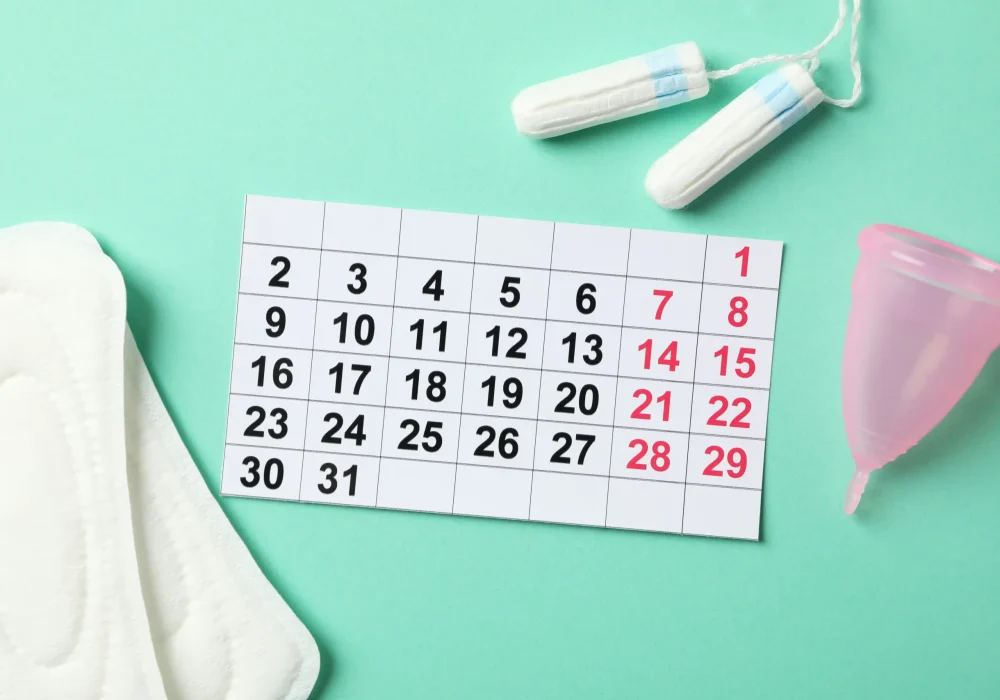
Why Your Cycle Matters
Your menstrual cycle is more than just “that time of the month.” It’s a finely tuned process involving hormones, your ovaries, and your uterus, all working together to create the best environment for conception. When something’s off, your cycle might drop little hints that your body needs extra support.
What to Watch For in Your Cycle
1. Regularity is Key
A regular cycle, typically 21–35 days, indicates that your hormones are in balance and ovulation is likely happening. If your cycle is all over the place—short one month, long the next—it could mean stress, hormonal imbalances, or other underlying issues are interfering with ovulation.
Tip: Start tracking your cycle using an app or a journal. Consistency is key, and tracking can help you spot patterns.
2. Ovulation Signs
Ovulation is your body’s big fertility moment each month. Signs to look for include:
-
- Cervical Mucus Changes: Around ovulation, your cervical mucus becomes clear, stretchy, and egg-white-like—a fertile sign!
-
- Basal Body Temperature (BBT): After ovulation, your BBT will rise slightly (about 0.5°F).
-
- Ovulation Pain: Some women feel a mild cramp or twinge on one side of their abdomen during ovulation.
Tip: Combine tracking cervical mucus and BBT to pinpoint ovulation and your fertile window.
3. The Length of Your Luteal Phase
The luteal phase—the time between ovulation and your next period—should be about 12–14 days. If it’s shorter than 10 days, it might be harder for a fertilized egg to implant and thrive.
Tip: Support your luteal phase with nutrient-rich foods, like leafy greens and healthy fats, and talk to a healthcare provider if you suspect it’s an issue.
4. Period Details Matter
Yes, even the nitty-gritty of your period is important! A healthy period should:
-
- Be moderate in flow (neither super light nor heavy).
-
- Have minimal clotting or cramping.
If your period is very light, excessively heavy, or painful, it could signal hormonal imbalances, fibroids, or endometriosis.
Tip: If you notice irregularities, don’t hesitate to seek professional advice. It’s better to address these issues early.
5. PMS: Friend or Foe?
Mild mood changes or bloating are common before your period, but severe PMS could mean your hormones are out of sync. High levels of estrogen or low levels of progesterone can contribute to these symptoms—and might affect your fertility.
Tip: Consider lifestyle changes like reducing sugar, managing stress, and adding magnesium-rich foods (like nuts and seeds) to your diet.
Why This Information Matters for Fertility
Understanding your cycle isn’t just empowering—it’s essential for knowing when you’re most fertile and identifying potential roadblocks to conception. Each phase of your cycle provides feedback on how your body is functioning. By tuning in, you can work with your body, not against it.
Practical Steps to Support Your Cycle
-
- Track Your Cycle: Use apps like Flo, Clue, or Natural Cycles to monitor patterns.
-
- Eat for Hormone Health: Focus on whole foods, plenty of fiber, and healthy fats to support hormonal balance.
-
- Manage Stress: High stress can throw off ovulation. Try yoga, meditation, or even just a long, uninterrupted shower (if you can swing it!).
-
- Get Support: If something feels off, don’t wait—reach out to a healthcare provider or fertility coach for guidance.
Your cycle isn’t just a clock ticking toward your period—it’s a roadmap to your fertility. By learning to read its signs, you can take charge of your journey to motherhood with confidence. And remember, you don’t have to navigate this alone—I’m here to help every step of the way.
Want more tips or personalized support for decoding your cycle? Let’s chat and create a plan tailored just for you.